Friday, September 21, 2012

Empanadas Chilenas

To celebrate Chile's Independence Day I made a classic holiday food: empanadas.

There are a few variations on Chilean empanadas, most importantly wether they are baked (al horno) or fried (fritas).  The other important variations are the fillings.  The most common are Empanadas de Pino, made with ground beef, hard boiled eggs, black olives and golden raisins.  You can also fill the empanadas with cheese or "a la Napolitana" with cheese, prosciutto and basil.

The following is the recipe for Empanadas de Pino al Horno: (makes approx. 12 large empanadas)


First, prepare the accoutrements:

Hard boil 3 eggs.  I recommend the following method.  Place the eggs in cold water and bring to a boil.  When the water reaches a hard boil, remove from the heat and let rest in the hot water for 8 minutes.  Transfer to an ice bath for a few minutes, then peel.  These will be cut into quarters.

Drain and rinse extra large black olives.

Soak the golden raisins.  I have been soaking the raisins in Chilean Sauvignon Blanc, it adds a nice touch of acid to the raisins (and gives you a reason to finish the bottle as you prepare the rest of the empanadas).


Then, it is essential to prepare a good dough (masa).

4 c. AP flour
1 tsp. baking powder
1/2 c. melted lard
1/2 c. clarified butter
3/4 c. warm water
1 tbsp. salt

Sift the flour, baking powder and salt together into a mound on a table top and form a volcano to contain the liquid ingredients.  Add the lard and butter and start to whisk the ingredients together from the inside to avoid the liquid escaping.  Knead the dough JUST until it is fully incorporated.  Over kneading will make the dough too tough.  When finished, place in a bowl, cover with a damp cloth and allow to sit for 45 minutes.

While the dough is resting, prepare the pino.

1 1/2 lbs. 85/15 ground beef
1 large onion
4 tbsp vegetable oil
3 tbsp ground cumin
2 tbsp salt
1 tsp granulated white sugar
1 tbsp freshly ground black pepper

Chop the onions and sauté with 1 1/2 tbsp oil on medium heat until they are nicely browned.  Remove onions from the pan to be added to the pino.  Heat a clean pan over high heat and add oil when HOT.  The pan should almost be at smoke point when you add the oil.  Add the ground beef, cumin, salt and pepper.  Lower heat to medium-high.  Stir until well browned and add the the browned onions.  Lower heat to a simmer to allow flavors to marry.  Do not be afraid to well season the Pino.

Now it's time to roll the empanadas.

Remove the dough from the bowl and cut into two pieces.  Roll each half out into a log and cut into 6 sections.  Roll each piece into a ball and then flatten into a circle.  Into each flattened circle add a 1/4 of a hard boiled egg, an olive, about 10 raisins and 2 well rounded tablespoons of pino to the top half of the dough.  Brush the edges of the dough with an egg wash, fold and pinch the bottom layer over the top layer every 1/2 inch all the way around the edge.

Lay the finished empanadas on a baking sheet dusted with flour and brush the tops with an egg wash, and bake at 375ºF until golden brown.


Thursday, November 10, 2011

Homemade Gingerale

In the spirit of the season... This is one component of a cocktail I am working on:

Homemade Gingerale:
1 c. cane sugar
2 tbsp peeled and grated ginger root
1/4 tsp. dry yeast
1 lime, juiced
cold filtered water


Combine the dry ingredients in a PLASTIC 2 liter bottle (make sure to use plastic so you can manually monitor the pressure in the bottle).  Add the wet ingredients and fill bottle to a little below the neck.


Leave the finished product at room temperature for 24-48 hours and monitor pressure occasionally.  When the bottle is firm, release the pressure and refrigerate.

I need to do some experimentation with the best way to filter my ginger ale.  I will keep you updated.

5/8/14 UPDATE:  This experiment was fun.  I learned a couple things though.  Depending on the ambient temperature when the initial fermentation begins, your bottle may keep fermenting for a while.  Opening the bottle too early resulted in a very volatile and messy experience.  The product after a few days had a pretty profound yeasty, raw dough flavor which I disliked.  I closed the cap and left the ginger ale in my fridge for another week (meaning I gave up on it).  When I retried the ginger ale after that week all the yeast had died and the flavor dissipated.  The finished product was decently carbonated and pretty delicious.  My only complaint was the lime juice didn't taste fresh.  In future batches I think I will omit the lime juice and add it as an additive/ garnish when served.


Saturday, June 11, 2011

Chablis Training Seminar Highlights - June 8th

Recently I had the opportunity to attend a Chablis Training Seminar produced by the Burgundy Wine Board.  The highlights of the seminar were the discussion of Chablis as one of the most iconic white wines in the world and the associated high demand and fraud; the 'climats' of the Grand Cru appellation; and the incredible diversity of vinification styles within Chablis.

Look at this map: Chablis.


<Climats> of the One-and-Only Grand Cru Appellation

That's right, there is only one Grand Cru appellation in Chablis.  So why are there names listed on the bottle after the Grand Cru AOC?  Within the vineyard there are seven different 'climats,' separated by elevation, slope and degree of south-facing sun exposure: Blanchot, Bougros, Les Clos, Grenouilles, Preuses, Valmur, Vaudésir.

The wines we tasted are as follows:

1. Petit Chablis, 2009, La Chablisienne  Clean, zippy lemon-lime juice and bitey, green apple tang with very slight vegetal and musty undertones. (Suggested Pairing: cheese puffs)

2. Chablis, 2009, Domaine Daniel DAMPT et Fils  Slightly more developed fruit, leaning towards the floral, sweet pear, green apple and vanilla qualities.

3. Chablis, 2009, Domaine des Malandes Sweet, aromatic lemon oil dances upon a seashell minerality with with an essence of delicate, toasty, grilled green asparagus.

4. Chablis 1er Cru, Montmains, 2009, Domaine VOCORET et Fils  This wine exhibited some of the vinification styles that are less expected from a Chablis.  Definite toast and butter notes with a lemony, stone fruit core.  With this wine, the ability to pair with creamy seafood really started to  jump up and down. (Suggested pairing: offal/ headcheese and thicker butter sauces)

5. Chablis 1er Cru, Mont de Milieu, 2009, Domaine SIMMONET-FEBVRE  Although it has the same structure of the Chablis and Petit Chablis, the fruit really changed on this one.  The fruit became much softer and really balanced the acidity.  White peaches and floral notes sang on the nose, and dissolved on the palate.

6. Chablis 1er Cru, Vaillons, 2008, Domaine du Chardonnay  This was the most interesting wine in the flight.  It was pure olive or oyster brine.  The fruit was yellow, both apples and pears.  The culprit?  Bâtonnage.  The stirring of the lees left some warm brioche to suck up the sauce.

7. Chablis Grand Cru, Bougros, 2008, William FEVRE  This one was corked.  I would like to personally re-taste this Grand Cru, and I think I've seen it in the local wineshops.  Strong minerality and sweet vanilla notes persisted on the nose.

These were all pre-opened and were approaching room temp.  However the final Grand Cru was opened about 20 minutes before we tasted it and really showed some interesting characteristics from bottle aging.

8. Chablis Grand Cru, Grenouilles, 2005, La Chablisienne  I was a little overwhelmed with this one. It was definitely was tacked onto the uncommon delights list.  Previously, I have predominantly tasted older white wines of the Champagne and Riesling regions.  A true Chablis Grand Cru with some age on it morphs into some interesting pantry (or maybe special order) items: lanolin, beeswax and toffee soaking into the juicy bruised pineapple.


Wednesday, June 8, 2011

2006 Castello di Gabbiano Chianti Classico Riserva DOCeG

2006 Castello di Gabbiano Chianti Classico Riserva DOCeG


I have been craving pasta in a light tomato sauce all week. Along with this craving has come the desire for a good Sangiovese.  Well, tonight I am eating pasta... Pasta fagioli with pork belly, kale in a tomato sauce. Thanks to my girlfriend who is running the kitchen, I had some time to run to grab a bottle of wine.

Here we go... another attempt at a readable wine tasting note:
The color was darker than I expected: a hazy garnet core, flowing into a softer red with defined staining in the legs, I was thinking, "Isn't this supposed to be a red fruit grape?"  I had to throw it in the decanter.  Wow, this 2006 is still young!  Needless to say, the red fruits are there.  The penetrating red cherry, tart pomegranate and cranberry flowed smoothly into the intense dusty, chalky minerality.  The phenolic structure on the nose was soft white pepper and licorice with a nice fennel vegetative quality.

On the palate, this translated into round, cherry, black raspberry and pomegranate acidity with a dusty mouthfeel.  The cherry pit and rhubarb tannins were mellowed out by the sweeter oak influence, imparting notes of cinnamon, cardamom and some grippy tobacco.  With a pretty big body and length on the tongue, this is a serious red-fruit wine...  not a dainty, delicate red-fruit wine.

Monday, June 6, 2011

Headed "north" with a 2006 Hans Lang Charta Trocken Riesling and homemade Borscht.

2006 Hans Lang Charta Trocken Riesling - Rheingau

I'll start with the wine because I've been excited to crack this one open.  Rieslings are one of my first loves when it comes to wine.  This goes back to when I first started reading about wine.  Almost all my studies have begun with Alsace, France and riesling.  Although they relatively come from the same part of the world, German rieslings have a unique character that can't be found anywhere else in the world.

This "trocken" (dry) riesling was true to its label.  There was no residual sugar on the palate, but there was still plenty of aromatic fruit to go around.  As I've been re-reading some of my older wine post I realize that my strict-to-ISG standard tasting notes are not the most user friendly, so I'm going to try something new: para-phrased, sentence form tasting notes (although I still have my notebook with ISG tasting notes if you ever want to see thorough, objective tasting notes).


With a beautifully faint, yellow tinge and swift but well-defined legs, my first impression was that this wine was going to have a little residual sugar considering its 12.5% alcohol (although that is fairly high for a typical German riesling).  On the nose the fruit is sweet and very ripe.  It almost reminded me of a basket full of delicate fruits that have been sitting out a couple days too long.  Another drag at the nose and the definite mineral backbone and sweet honey and petrol notes emerge.
Then it hits your palate.  Wow, this a dry riesling.  No residual sugar, crisp but in check acidity and low alcohol give this riesling some serious body and length on the tongue.  The fruit on the palate is less expresive than on the nose, giving more evidence of bruised, ripe yellow apples and tangy, sweet persimmons.  Again, there is that minerality that does almost as much for the structure of this wine as its acidity.  I would imagine that is why good riesling, and this is a good riesling, can take some bottle age.

Check out this interview with Mr. Lang:

Borscht
So what do you eat with riesling?  (I guess most people ask what you drink with food, but often find myself a bit flip-flopped.)  Cold weather food of course!  My inspiration to make this Russian beet soup was inspired by the sour beets recipe in the book Wild Fermentation which was gifted to me by a friend.


First, I julienned a HUGE beet into long strips and fermented it for two weeks with caraway seeds in a saltwater brine.  Similar to my Porotos Granados recipe, I sweated the garlic and onions and then added the chopped potatoes, carrots, celery and beets.  I also added some ground, pan-toasted caraway seeds and about a tablespoon of fresh dill.  Then, I added boiling water, stired and lowered the heat to simmer for 20 minutes.

Topped with a nice quenelle of sour cream and some more fresh dill, here is the finished product:


Wednesday, June 1, 2011

2004 Chateau Bélair Premier Grand Cru Classé Saint Émilion

2004 Chateau Bélair Premier Grand Cru Classé Saint Émilion


Appearance:
Clear, deep ruby core w/ red rim variation, high - intensity with staining in the legs, med viscosity.

Nose:
Clean, high intensity, tart black cherries, tart black currants, jammy blackberries.  Organic earth notes, mushrooms and marshland.  Lots of oak, sweet baking spice, cigar box, leather, tobacco, spicy herbs, thyme and cedar.

Palate:
Med body, med acidity, med + length on the tongue, med + grape tannins, med (+) oak tannins.  Black cherries, black currants, tart black berries.  Organic earth, dense woody mushrooms and stoney minerality.  Lots of oak, sweet & spicy herbs, leather, tobacco, cigar box, cedar.

This wine is still very young!  The tart fruit still pierces through the sweet and spicy oak.  Good acidity, low alcohol and plenty of structure leave me curious how it will mature in 5, 10 and 20 years!

Tuesday, May 31, 2011

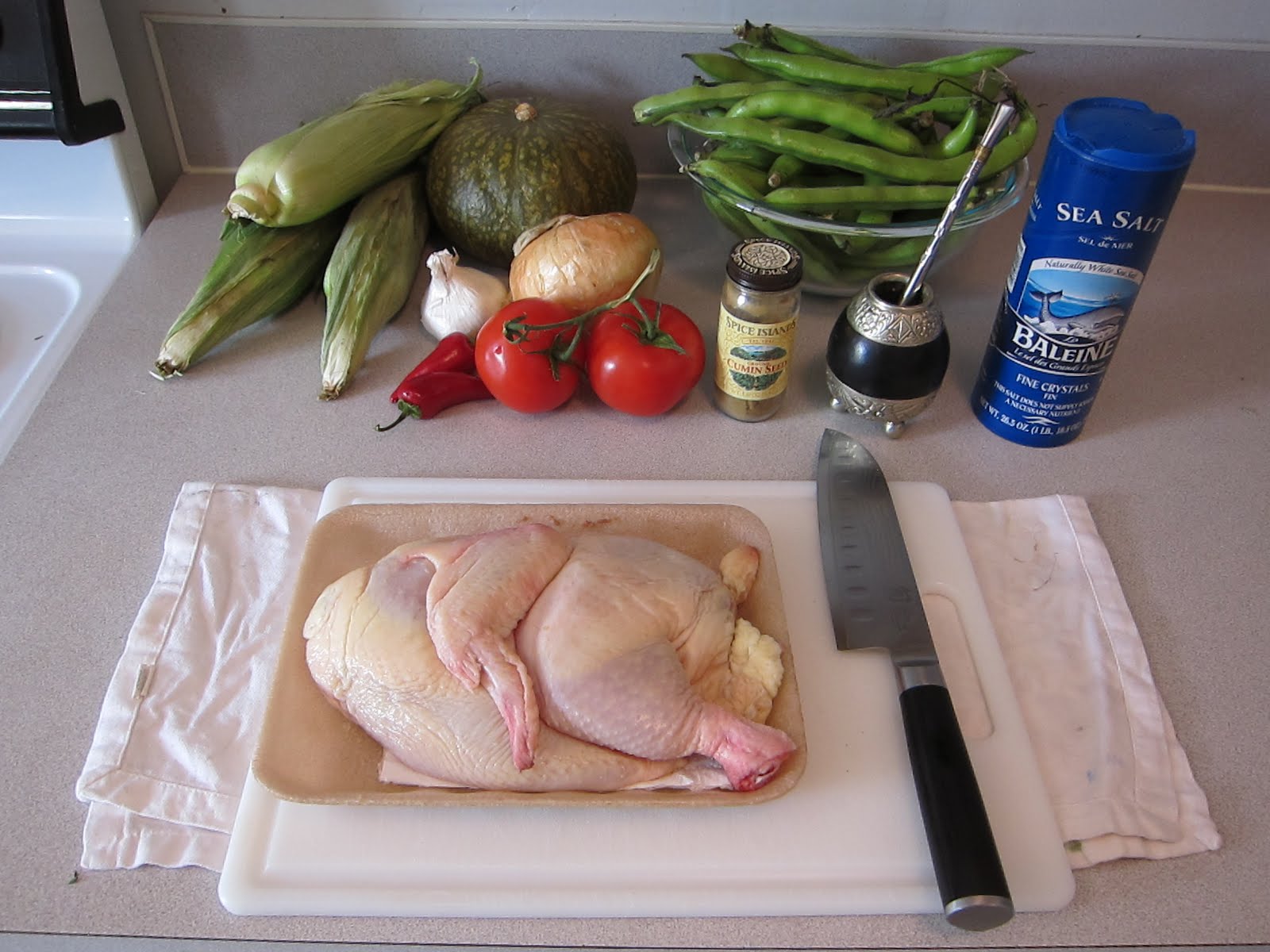
A classic Chilean lunch: Porotos granados, pollo asado and cebollas escabeche.

Making this meal actually started a few months ago.  One of my favorite memories of Chile was spending time at the market in Temuco where you can walk around and find Cebollas Escabeche in bulk: 


These red-wine vinegar pickled onions were one of my favorite snacks and I had been thinking about making them.  So I did:


All you have to do is quarter a medium sized yellow onion almost all the way through and skewer each quarter through the center with a knife.  Place them in a jar with a nicer red wine vinegar and let them soak in a cool dark place.  They can be eaten from a few weeks to a few months.  I am just finishing the first batch I made almost 6 months ago.

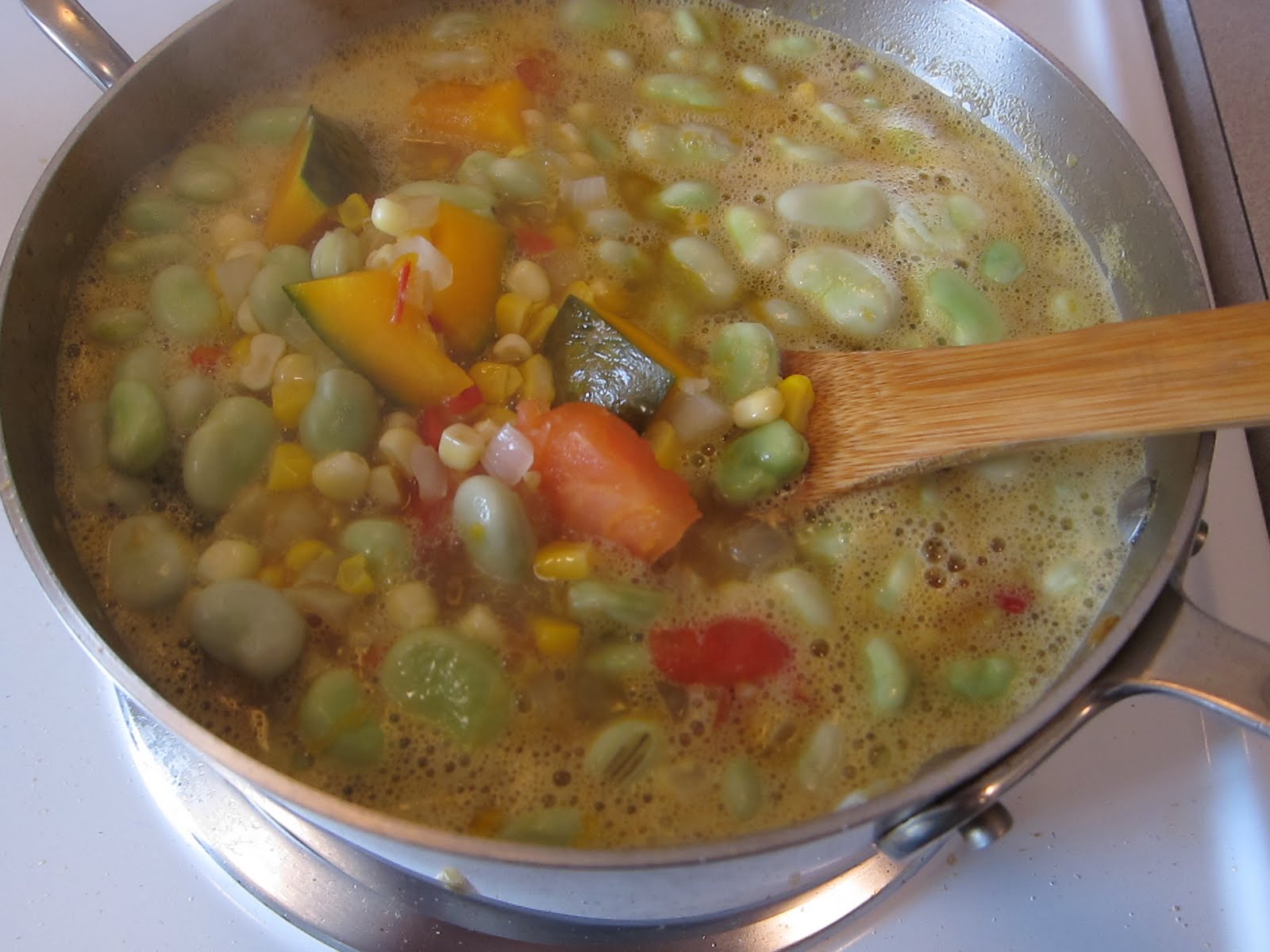
Traditionally, you eat Cebollas Escabeche dipped in salt as a condiment to go with a corn and bean stew called Porotos Granados.  Right now in Seattle the most accessible fresh beans I was able find were fava beans.  I would also use lima or navy beans.  Here is the recipe for about 4 servings:


Porotos Granados:

3 tbsp olive oil
4 coarsely diced garlic cloves
1 medium chopped onion
2 red fresno peppers, seeds removed and diced
1 med chopped tomato
3 ears of corn on the cob, kernels cut off of cob
2 1/2 lbs fava beans pods, removed from pod and removed radicle (the little embryonic stem)
1/2 kobocha squash (or other green skinned, orange flesh winter squash
1 tsp ground cumin
2 tbsp kosher or sea salt
4 pinches of fresh chopped cilantro (or basil) for garnish

Sweat the onion, garlic, peppers and cumin in olive oil with a little salt over high heat until fragrant.  Add the tomato until it starts to fall apart a little bit.  Add the corn and stir well.  Add the beans and stir well.  Add the squash and stir well.  Cover with boiling water and stir, then lower heat to medium-low.  Stir occasionally until beans  and squash are soft, about 25 min.  Garnish with fresh cilantro.


I served this with 1/2 a broiled chicken.  Just rub the halved chicken with olive oil and liberally apply salt and pepper.  Place in the center rack of the oven on a baking tray, skin side down at 325* F until almost fully cooked.  Then flip and turn on the broiler until the skin gets crispy and a little charred.


All you need now is to put out your Cebollas Escabeche with salt for dipping and a little pebre (hot sauce with cilantro, oilve oil and finely minced garlic) for the chicken.  Now there is a CLASSIC Chilean lunch.  Grab yourself a nice bottle of Chilean Sauvignon Blanc and you might as well be in Chile!